
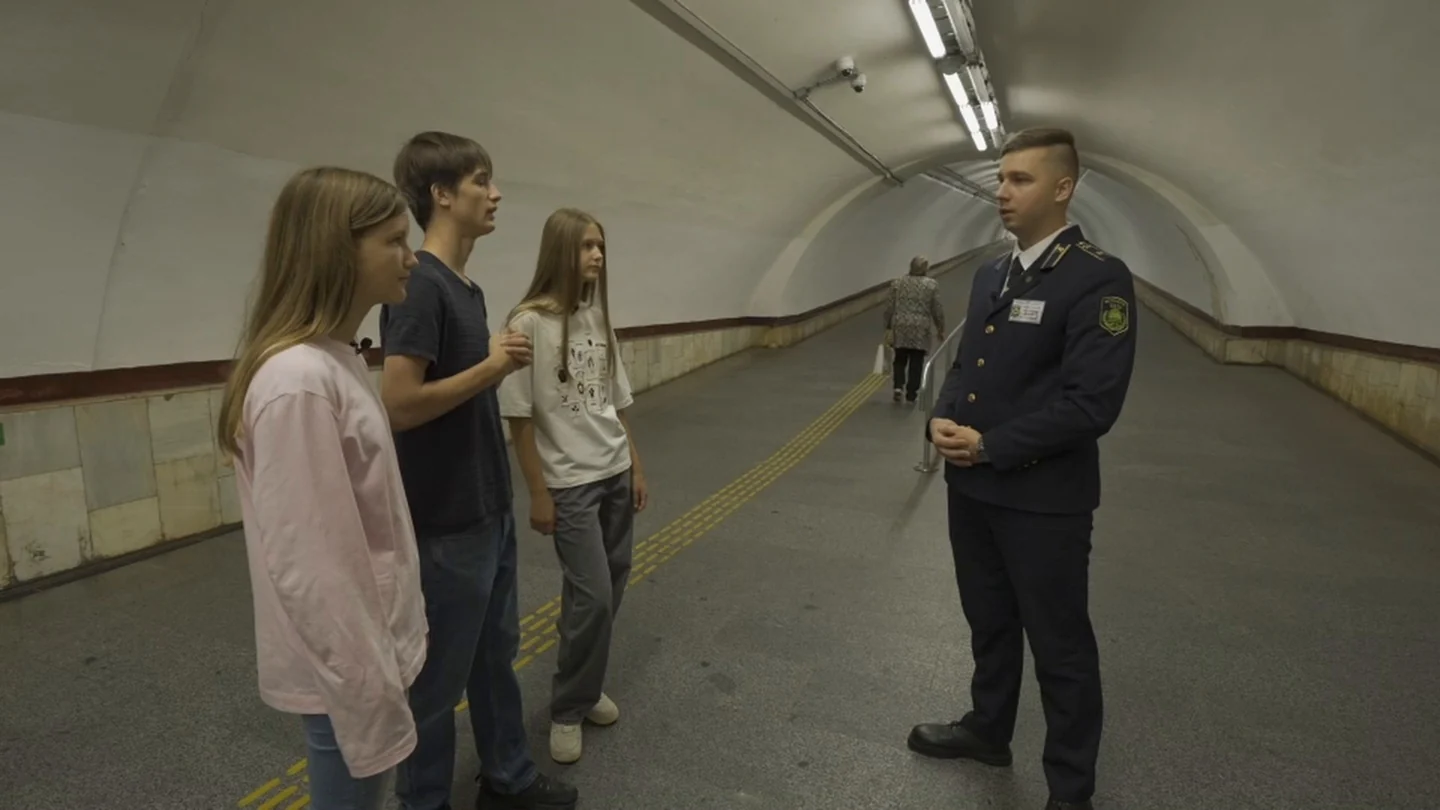
A profession passengers may overlook
For most people, a station is a route to a train or an exit to the city. We arrived with different questions: who organises its everyday work, how do staff coordinate and what skills does a station head need? This September 2026 recording continued our exploration of Kyiv Metro careers after meeting train drivers in August.
The start of the working day
The station head described inspecting the station and its surroundings, paying attention to structures and equipment, speaking with duty staff and holding working meetings. A familiar passenger route depends on continuous organisational work. Its contribution can be least visible when everything runs calmly and people can find their way to the train.
From education to leading a team
The teenagers asked about education, earlier roles and the move into management. When discussing school subjects, our interviewee highlighted mathematics, Ukrainian and foreign languages. This was his personal professional perspective, not a universal list of admission requirements. Working with people and a team also featured in his account of what he enjoyed about the job.
A station is the work of many teams
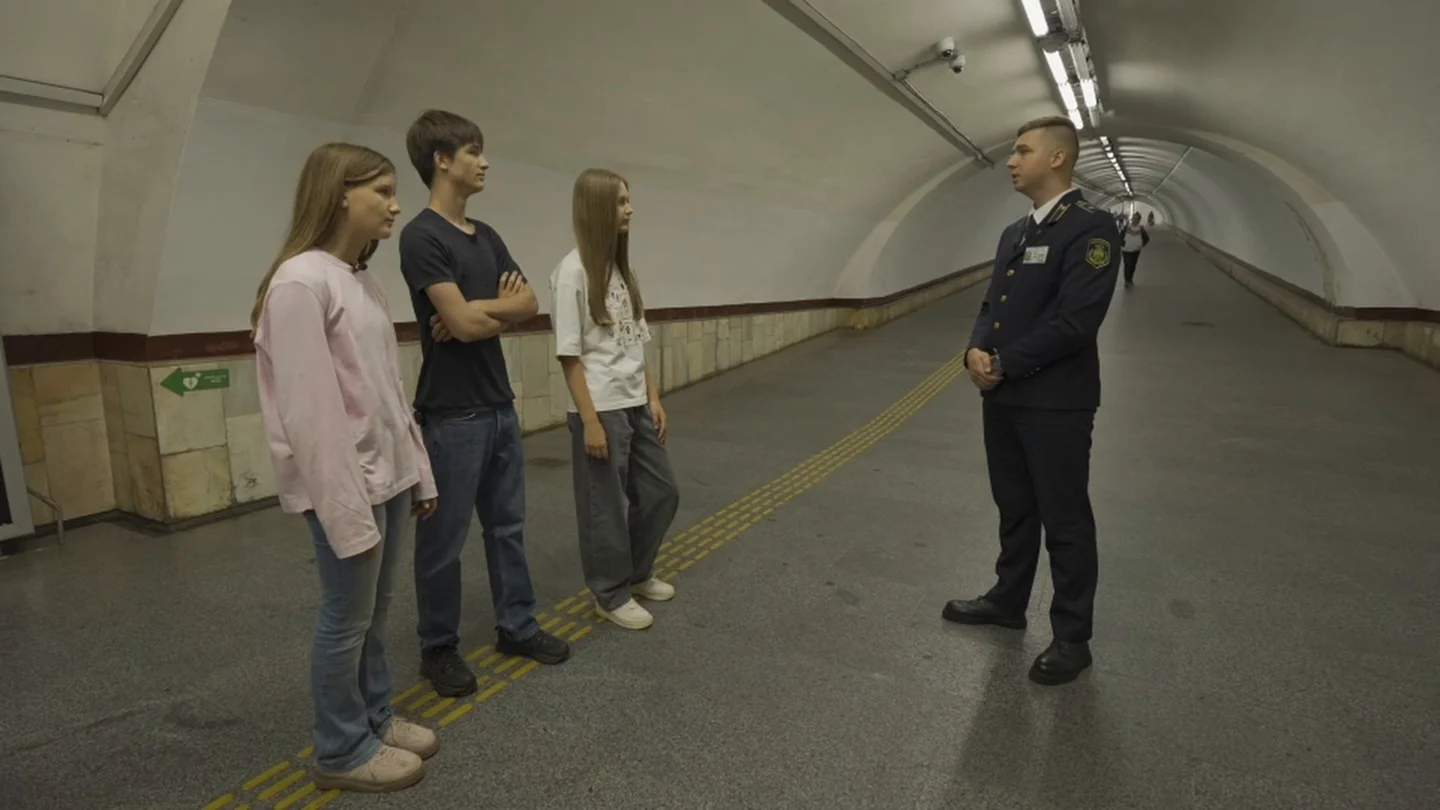
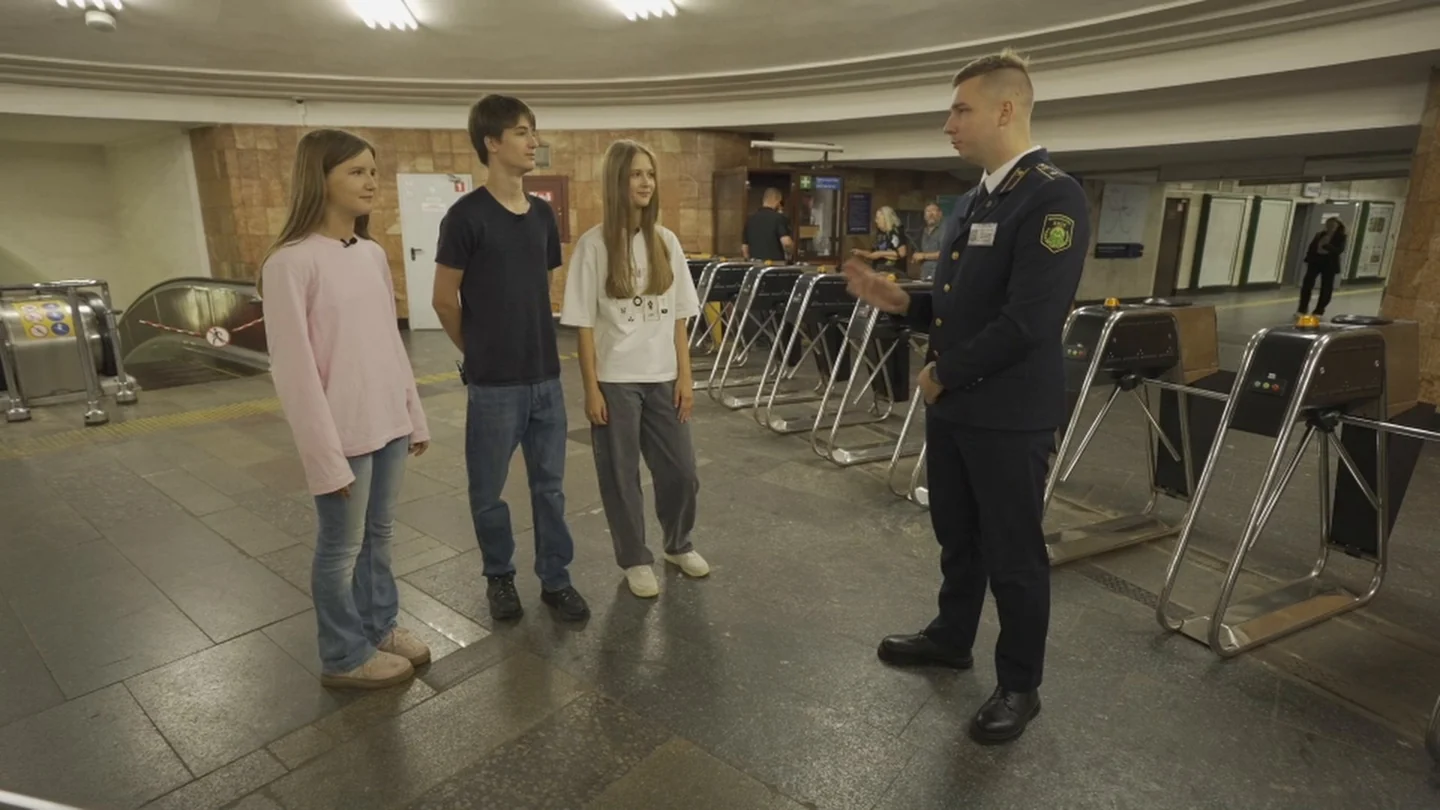
Part of the interview took place in the pedestrian passageway before the conversation continued in the entrance hall near the ticket gates. Questions covered the duties of entrance staff, passenger access equipment and periods of high demand. An important distinction emerged: the station head coordinates work but does not personally perform every task handled by other teams.
What automation changes
The discussion also considered digital systems and the role of people at the station. Our interviewee expressed the view that automation can simplify some processes, while passenger assistance and unusual situations still require staff. This suggests a useful career question: which tasks may change, and which skills will continue to matter?
What we took away
The metro includes far more professions than a passenger encounters directly. For RealSkills, the visit offered a chance to discuss organisation, communication and responsibility alongside transport. A teenager’s next step could be to compare different interests: operating equipment, working with people or coordinating a team.
A small step to try
- Imagine organising entry to a school event. What questions might visitors have before it begins?
- Write a short set of directions for a first-time visitor and test it with someone you know.
- Ask a professional which tasks they perform, which they coordinate and when they involve other teams.